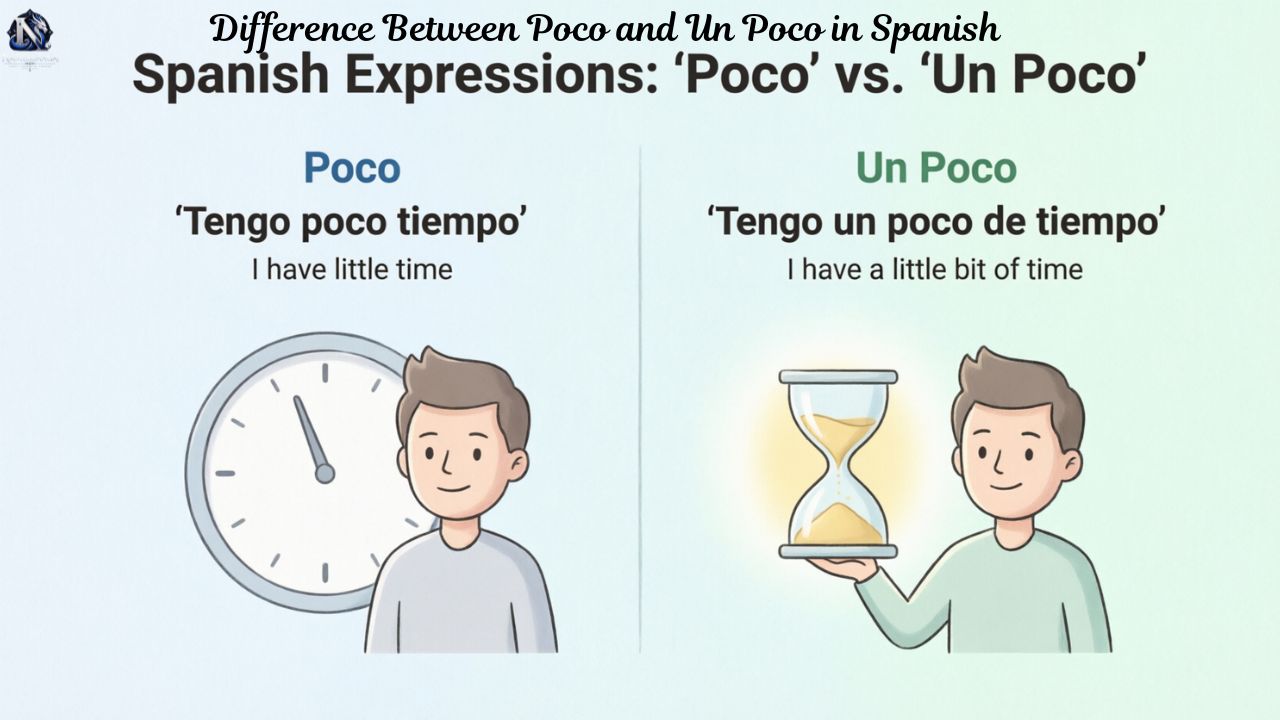
Poco means “little” or “not much.” It tells the listener the amount is too small. Un poco means “a little” or “a bit.” It tells the listener there is some. Tengo poco tiempo means “I’m short on time.” Tengo un poco de tiempo means “I can spare a few minutes.”
Picture yourself at a taquería in Houston. You look at the salsa bar and say, Hay poca salsa. That sounds like a complaint, because you are saying there is not enough. Now say Hay un poco de salsa. That sounds like good news, because there is some left. One small word changes the whole message.
Difference Between Poco and Un Poco in Spanish
The difference is about how the speaker sees the amount. Both words describe something small, but they lean in opposite directions.
- Poco stresses what is missing. The amount is less than you need or expect.
- Un poco stresses what is there. The amount is small, but it counts.
- Picture a cup of coffee. Poco café means the cup is nearly empty. Un poco de café means there is still a sip to enjoy.
| Spanish | English | What it suggests |
| Hay poco café. | There is little coffee. | Not enough |
| Hay un poco de café. | There is a bit of coffee. | Enough for now |
| Hablo poco español. | I speak very little Spanish. | Almost none |
| Hablo un poco de español. | I speak some Spanish. | Some ability |
| Trabajo poco. | I don’t work much. | Too little |
| Trabajo un poco. | I work a bit. | Some work |
What Does Poco Mean in Spanish?
Poco means “little,” “not much,” “few,” or “not many.” It changes its job depending on the word next to it.
Poco as an Adjective
Before a noun, poco describes the amount and matches the noun in gender and number.
- poco tiempo: little time
- poca gente: few people (gente is singular in Spanish)
- pocos turistas: few tourists
- pocas mesas: few tables
- poca agua: little water (use poca, even though you say el agua)
Poco as an Adverb
After a verb, poco tells how much or how often. It never changes form in this role.
- Ella come poco. She does not eat much.
- Salimos poco en invierno. We don’t go out much in winter.
- Muy poco means “very little,” and poquísimo means “extremely little.”
Poco Before an Adjective
Before an adjective, poco means “not very.” It is a polite way to say something negative.
- poco amable: not very kind
- poco claro: not clear
- poco probable: unlikely
- It stays the same: Son poco amables.
Poco as a Pronoun
By itself, poco can replace a noun that the listener already knows.
- Pocos lo saben. Few people know it.
- Quedan pocas. Only a few are left.
What Does Un Poco Mean in Spanish?
Un poco means “a little” or “a bit.” It sounds neutral or friendly, and it often softens what you say.
Un Poco With Verbs
Put it after the verb. It does not change.
- Hablo un poco. I speak a little.
- Descansé un poco. I rested a bit.
- Ayúdame un poco. Help me a little.
Un Poco With Adjectives and Adverbs
Here it means “a bit” or “kind of.” It fits best with neutral or negative descriptions.
- un poco caro: a bit expensive
- un poco cansado: a bit tired
- un poco tarde: a bit late
- un poco más despacio: a bit slower
Un Poco De Before a Noun
Add de to say “a bit of” something.
- un poco de sal: a bit of salt
- un poco de paciencia: a bit of patience
- un poco de agua: a bit of water
- The form stays the same for masculine and feminine nouns.
Un Poco as a Standalone Answer
You can also use it alone when someone asks a question.
- ¿Te duele? Un poco. Does it hurt? A little.
- ¿Sabes cocinar? Un poco. Can you cook? A bit.
Read More : What Does NGL Mean in Chat? Meaning, Examples, and How to Reply
Countable and Uncountable Nouns
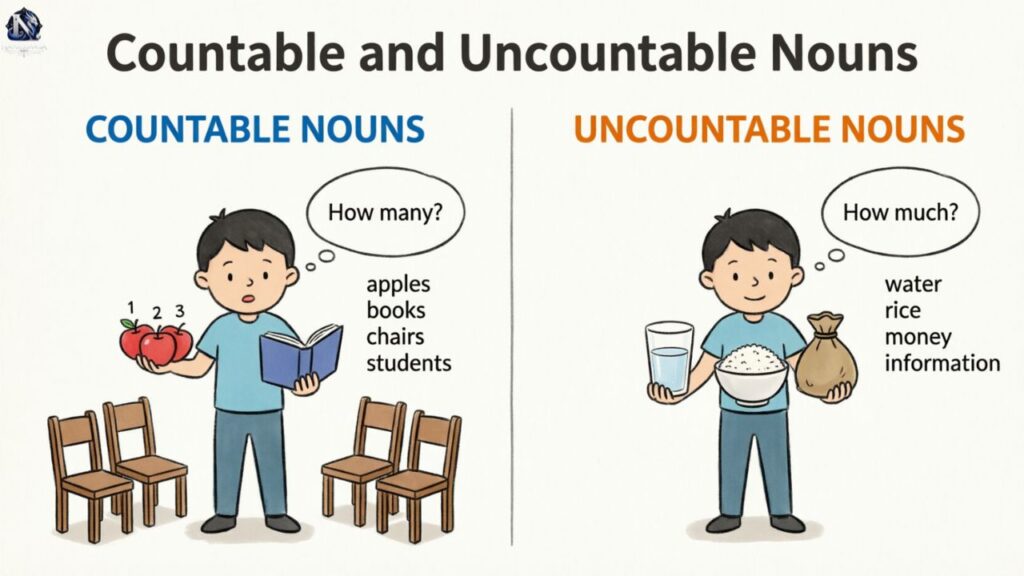
A countable noun is something you can count, like amigos or mesas. An uncountable noun is something you measure, like agua, tiempo, or paciencia. This split decides which form sounds natural.
Poco With Countable Nouns
Use the plural.
- Pocos amigos vinieron. Few friends came.
- Quedan pocas sillas. Few chairs are left.
Poco With Uncountable Nouns
Use the singular and match the gender.
- poco dinero: little money
- poca luz: little light
Un Poco De With Uncountable Nouns
Use un poco de plus the noun.
- un poco de música: a bit of music
- un poco de ayuda: a bit of help
A Few of Something Countable
For countable nouns, Spanish uses the plural forms unos pocos and unas pocas. Do not add de.
- unos pocos amigos: a few friends
- unas pocas cartas: a few letters
- unos cuantos means “quite a few,” a slightly bigger group
How Poco Changes for Gender and Number
When poco describes a noun, it copies that noun’s gender and number. As an adverb, it does not change at all.
| Form | Used with | Example |
| poco | masculine singular | poco vino |
| poca | feminine singular | poca comida |
| pocos | masculine plural | pocos libros |
| pocas | feminine plural | pocas personas |
- The adverb never changes: Duerme poco.
- Un poco never changes before de: un poco de leche, un poco de queso
Why the Word “De” Matters
Most learner mistakes come from de. The rule is short.
- After un poco, add de before a noun: un poco de agua.
- After poco, poca, pocos, pocas, do not add de: poca agua, pocos amigos.
- After unos pocos and unas pocas, do not add de: unos pocos amigos.
- You may hear una poca de sal in casual speech in some places. The standard form is un poco de sal, so use that in class, at work, and in writing.
Poco and Un Poco in Real US Places
Spanish is part of daily life across the United States. These examples come from neighborhoods where you will hear it.
- Calle Ocho, Little Havana, Miami: Un cortadito con un poco de azúcar, por favor. A cortadito with a little sugar, please.
- Houston taquería: ¿Le pongo un poco de salsa? Should I add a little salsa?
- Olvera Street, Los Angeles: Hoy hay poca gente. Few people are here today.
- Washington Heights, New York: Quedan pocas empanadas. Only a few empanadas are left.
- San Antonio River Walk: Hace poco abrieron un restaurante nuevo. A new restaurant opened recently.
- Pilsen, Chicago: El tren llega dentro de poco. The train arrives soon.
- Mission District, San Francisco: Este burrito es un poco caro, pero es enorme. This burrito is a bit pricey, but it is huge.
- Dallas airport: Tenemos poco tiempo para la conexión. We have little time for the connection.
- Grand Central Terminal, New York: Por poco pierdo el tren. I almost missed the train.
- Phoenix office: Hablo un poco de español con mis clientes. I speak a little Spanish with my clients.
Common Expressions With Poco and Un Poco
These fixed phrases show up every day. Learn each one as a single unit.
- poco a poco: little by little (Está mejorando poco a poco.)
- hace poco: recently (Nos vimos hace poco.)
- dentro de poco: soon (Te llamo dentro de poco.)
- por poco plus a verb: almost (Por poco me caigo.)
- un poco más: a little more (Ponle un poco más de sal.)
- un poco menos: a little less
- poco más de: a little over (Tardó poco más de una hora.)
- poco antes and poco después: shortly before and shortly after
Poco, Un Poco, and Similar Words
Other quantity words sit close to these two. Knowing them helps you pick the right level.
| Word | Meaning | Example |
| mucho | a lot | Hay mucho tráfico. |
| bastante | quite a lot, enough | Tengo bastante trabajo. |
| demasiado | too much | Es demasiado dulce. |
| suficiente | enough | No hay suficiente espacio. |
| algo de | some | Tengo algo de tiempo. |
| unos cuantos | quite a few | Conozco a unos cuantos. |
| casi nada | almost nothing | Queda casi nada. |
| apenas | barely | Apenas hablo inglés. |
Here is how they compare on a scale from empty to full:
- casi nada and poquísimo are at the bottom.
- poco comes next, meaning not enough.
- un poco and algo de mean some.
- bastante and suficiente mean enough or more.
- mucho and demasiado are at the top.
Regional Notes: Poquito, Tantito, and ¿A Poco?
Spanish changes from place to place, and the United States has many varieties.
- Poquito is the friendly, smaller form of poco. Un poquito de café sounds warm and polite. You will hear it often from Mexican, Central American, and Caribbean speakers.
- Tantito is common in Mexico for “a little bit.” Espérame tantito means “wait a moment for me.”
- ¿A poco? in Mexican Spanish means “Really?” It has nothing to do with quantity.
- Both un poco and un poquito take de before a noun: un poquito de agua.
- If you are talking with a heritage speaker, both forms are natural, so copy the one you hear.
Common Mistakes and How to Fix Them
| Incorrect | Correct | Reason |
| un poco agua | un poco de agua | Add de before a noun |
| poca de sal | poca sal | No de after poca |
| pocos de amigos | pocos amigos | No de after pocos |
| unas pocas de amigas | unas pocas amigas | No de with plurals |
| Hablo poco de español | Hablo un poco de español | Poco alone means almost none |
| Es un poco amable | Es poco amable | For “not very kind,” use poco |
Read More : 315+ Funny Duck Names That Will Make You Quack Up
Frequently Asked Questions
What is the difference between poco and un poco?
Poco means “not much” and points to a shortage. Un poco means “a little” and points to having some. Hablo poco español means you speak almost none. Hablo un poco de español means you speak some.
Does poco mean “not very” before an adjective?
Yes. Poco amable means “not very kind.” For a soft “a bit,” use un poco with adjectives like caro or cansado, as in un poco caro.
Why do you say “un poco de agua” and not “un poco agua”?
Un poco works like “a bit,” and it needs de to connect to a noun, as in “a bit of water.” Skipping de is one of the most common learner errors.
Can you say “una poca” in Spanish?
You can say poca before a feminine noun, as in poca sal. Do not use it in the phrase un poco de. The standard form is un poco de sal, even with feminine nouns.
Does poco change for gender and number?
Before a noun, yes: poco, poca, pocos, pocas. After a verb or before an adjective, it never changes: Ella habla poco. Son poco amables.
Can you use poco and un poco with countable nouns?
Poco works in the plural: pocos amigos. For “a few,” use unos pocos or unas pocas. Un poco de mainly pairs with uncountable nouns like tiempo or agua.
What is the difference between un poco and un poquito?
Un poquito is the smaller, friendlier form. The meaning is close, but it sounds softer, especially in Latin American Spanish. Both need de before a noun.
What do poco a poco, hace poco, and por poco mean?
Poco a poco means “little by little.” Hace poco means “recently.” Por poco plus a verb means “almost,” as in Por poco me caigo.
Conclusion
Knowing how to tell the difference between poco and un poco in Spanish makes everyday conversations much easier. Poco usually expresses a small or insufficient amount, while un poco means “a little” and often sounds softer or more positive. The meaning can change depending on the noun, verb, and context. Remember that poco can also change to poca, pocos, or pocas when it describes a noun.
The easiest way to remember the difference is to think of poco as “little” and un poco as “a little.” With regular practice and real Spanish examples, you can choose the right expression naturally. Understanding this small grammar difference will help you sound clearer and more confident when speaking or writing Spanish.

I’m Asma, founder of namessaaga.com, passionate about helping brands and startups discover unique, creative, and memorable names that stand out.