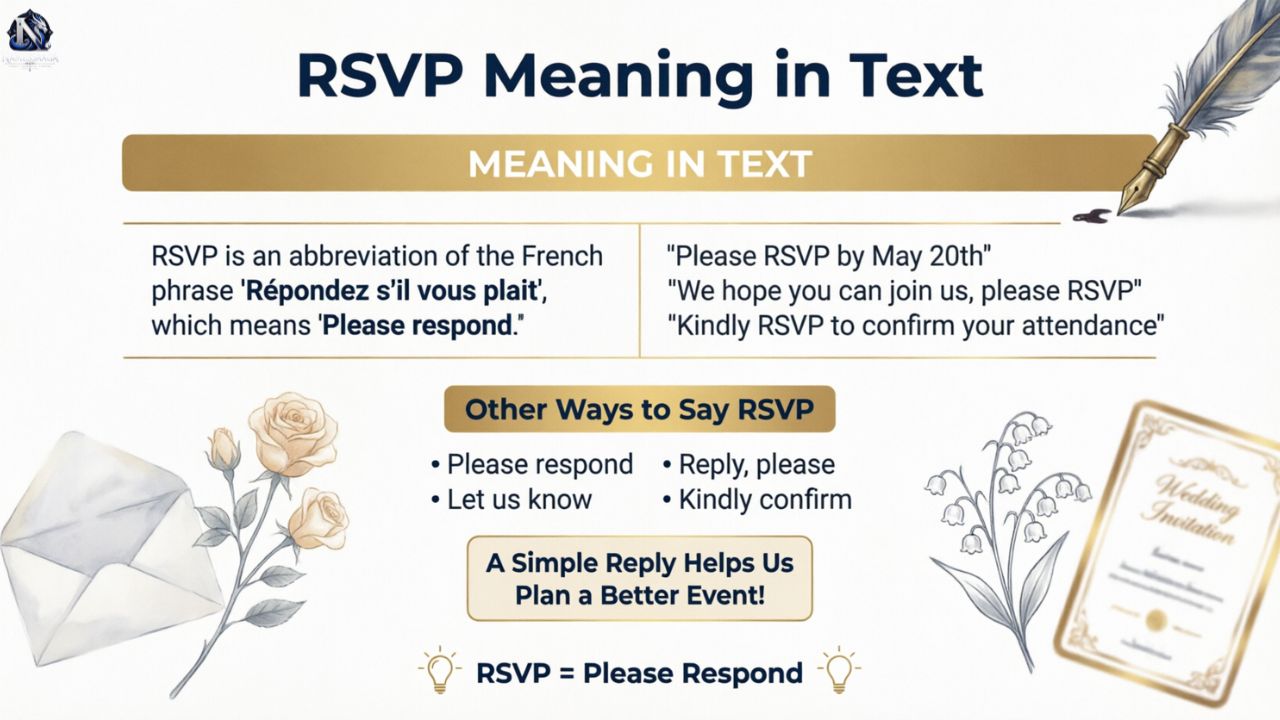
RSVP meaning in text message, event invite, group chat, or social media post can be confusing if you usually associate it with formal invitations. The phrase may appear in a wedding message, birthday plan, dinner invitation, work event, or online gathering. Understanding the wording helps you know whether someone wants a simple confirmation, an attendance decision, or a response before a specific deadline.
In everyday digital conversations, the meaning depends on the message and situation. This guide explains how to interpret an RSVP request, what the sender expects, and how to reply clearly when you can attend, cannot make it, or need more time to decide.
Simple Examples:
“Dinner Saturday at 7 PM. RSVP by Thursday” means the host wants to know whether you will attend before Thursday. They may need your answer to arrange food, seating, or reservations.
“Movie night at my place, RSVP!” is more casual. Here, the sender wants a simple confirmation so they know how many people are coming. You could reply, “I’m in!” or “Sorry, I can’t make it.”
Origin & Background
RSVP comes from the French phrase “Répondez s’il vous plaît,” which means “please respond.” It became widely used on invitations written in English, especially for weddings, dinners, parties, and other planned events.
Although the phrase is French, RSVP is now familiar to English speakers, especially in the United States. Today, you can see it on printed invitations, emails, websites, social media posts, and everyday text messages.
How It Evolved:
Traditionally, RSVP appeared on formal printed invitations. Hosts used it to learn how many guests would attend an event, which helped them arrange seating, meals, venue space, and other details before the occasion.
Modern communication has made RSVP much more casual. You might see it in a WhatsApp group, Instagram DM, Snapchat story, or event page. The purpose remains the same: the sender wants a clear response.
Real-Life Conversations (How People Actually Use RSVP)

The RSVP meaning in text becomes easier when you see it in normal conversations. People often use the term without sounding formal, especially when making plans with friends or organizing small gatherings.
Context matters because the same word can sound professional, friendly, or playful. However, the basic request does not change. Someone is asking you to respond about an invitation, event, or planned activity.
1. WhatsApp Group Chat
Person A: “Movie night at my place Friday. RSVP please.”
Person B: “I’m in!”
Person C: “Sorry, can’t make it.”
Here, RSVP simply means the organizer wants to know who will attend. The wording is casual, but the host may still need an accurate guest count.
2. Instagram DMs
Person A: “Birthday dinner Saturday. RSVP by Thursday!”
Person B: “Sounds fun! I’ll be there.”
On Instagram, someone might also write “RSVP in DM.” That means you should send a direct message to confirm attendance rather than replying publicly to the post.
3. Casual Text Message
Person A: “BBQ this weekend at 5. RSVP so I know how much food to get.”
Person B: “Count me in!”
This use shows why RSVP is not limited to formal invitations. Friends can use it for dinners, game nights, parties, or weekend plans when they need to know who is coming.
Read More : Rizz Meaning: What Does Rizz Mean in Text and Slang?
Emotional & Psychological Meaning
The RSVP meaning is mainly practical rather than emotional. It helps people make plans with better information. When someone asks you to RSVP, they usually need a decision so they can organize the event around the expected number of guests.
A timely response can also show consideration. If a host needs to reserve seats or prepare food, knowing whether you will attend helps them avoid unnecessary work. Still, RSVP itself does not carry a hidden emotional message.
What It Reflects:
RSVP can reflect responsibility because the person receiving an invitation is being asked to acknowledge it. A clear answer also gives the host useful information instead of leaving them uncertain about attendance.
It can also show respect for another person’s time and planning. However, you should not assume that failing to RSVP always means someone is deliberately rude. People can miss messages, forget deadlines, or misunderstand the request.
Usage in Different Contexts
The RSVP meaning in texting stays connected to confirming attendance, but the tone changes with the situation. A wedding invitation may sound formal, while a friend’s group message can make RSVP feel relaxed and playful.
You can therefore understand RSVP by looking at the surrounding words. The platform, relationship, event, deadline, and wording all provide clues about how seriously the response is expected.
1. Social Media
On Instagram, Facebook, Snapchat, and other social platforms, RSVP may appear in event posts, stories, captions, or direct messages. For example, “RSVP before spots fill up” asks interested people to confirm.
Social media RSVPs can also use links, forms, polls, or DMs. The method changes, but the purpose remains similar: organizers want to know who plans to attend.
2. Friends & Relationships
Friends often use RSVP for birthday dinners, parties, game nights, movie nights, and other social plans. The wording may be relaxed, such as “RSVP or I’ll assume you’re coming.”
In these conversations, RSVP does not necessarily sound formal. A friend might use it humorously while still wanting a real answer. The relationship between the people usually determines the tone.
3. Work or Professional Settings
In professional settings, RSVP commonly appears in meeting invitations, corporate events, conferences, and work chats. “Please RSVP by EOD” means the organizer wants your response by the end of the day.
A professional RSVP should normally be clear and polite. You might say, “I will attend,” “Unfortunately, I’m unavailable,” or “Thank you for the invitation. I confirm my attendance.”
4. Casual vs Serious Tone
RSVP can sound formal at a wedding, neutral at a work meeting, or casual in a group chat. The word itself does not decide the tone; the surrounding message does.
For example, “Please RSVP by May 10” sounds organized and formal. “RSVP for pizza night 😂” feels friendly. Both messages still ask people to respond about attending.
Common RSVP Mistakes and Confusions
People sometimes misunderstand an RSVP request because the phrase can appear in both formal invitations and casual messages. The key is to check what the host is asking you to confirm.
RSVP Does Not Mean You Must Attend
An RSVP asks you to confirm whether you plan to attend. You can accept or decline the invitation.
Ignoring the Response Request
Not replying can make it difficult for the host to finalize guest numbers, seating, meals, or reservations. Respond within the requested time when possible.
Assuming RSVP Is Always Formal
Although common on wedding invitations and formal events, RSVP also appears in texts, group chats, social media invites, and online event pages.
Replying After the Deadline
A late response may affect event planning. If you miss the RSVP deadline, contact the host directly and ask whether your attendance can still be accommodated.
Using RSVP in Every Message
For casual plans, phrases like “Let me know,” “Are you coming?” or “Can you confirm?” may sound more natural than RSVP.
When NOT to Use RSVP
It may feel unnecessary for urgent messages, very casual one-on-one conversations, or situations where no guest count is needed.
In some work conversations, clearer wording can also help. Instead of “RSVP,” you could write, “Please confirm if you can attend.” That removes any possible confusion for people unfamiliar with the term.
| Term | Meaning | Typical Tone | Common Use |
| RSVP | Please respond about attendance | Neutral | Events and invitations |
| Confirm | Give a clear decision | Formal | Work, bookings, plans |
| Let me know | Tell me your decision | Casual | Everyday conversations |
| Reply ASAP | Respond quickly | Urgent | Time-sensitive requests |
| Ignore | Give no response | Negative | Generally not recommended |
Variations / Types of RSVP Usage
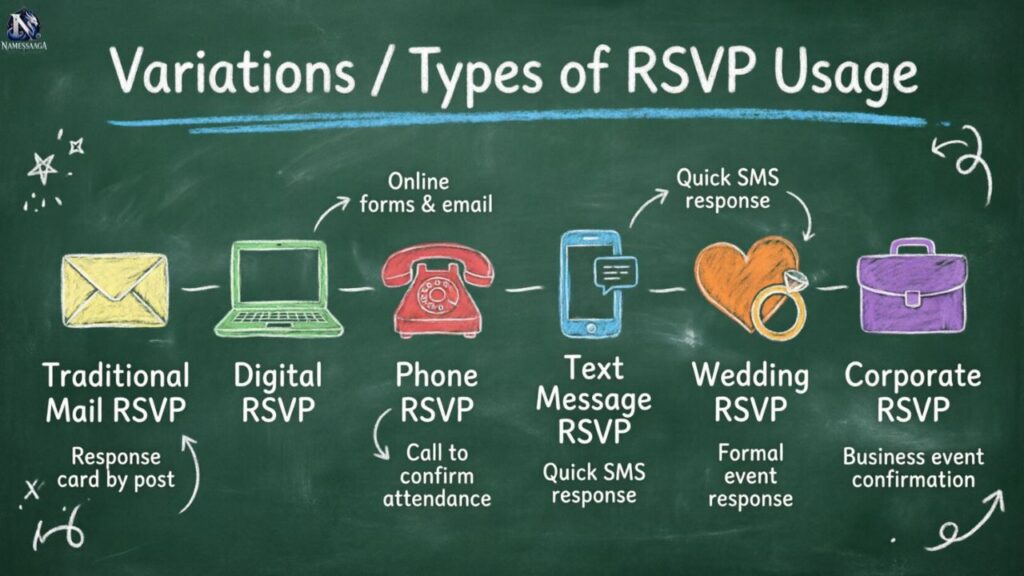
RSVP can appear with different words that change the details of the request. These phrases may tell you when to respond, how to respond, or whether you need to confirm attendance.
RSVP ASAP
RSVP ASAP means the sender wants your response as soon as possible. It is common when the host needs to finalize plans quickly.
RSVP
RSVP gives you a specific deadline. Reply before that date so the host can plan the event properly.
RSVP Only If Attending
This means you only need to respond if you plan to attend. If you are not coming, no reply may be necessary.
RSVP Required
RSVP required means the host expects you to confirm whether you will attend. You can accept or decline the invitation.
RSVP via Link
RSVP via link means you should confirm through an online form, event page, or digital invitation rather than replying directly.
RSVP in DM
RSVP in DM means sending a private message to confirm attendance. You may see this phrase on Instagram, Snapchat, or other social platforms.
RSVP to Confirm Your Seat
This phrase means your RSVP response helps reserve a place for you, especially when an event has limited seating or capacity.
RSVP +1
RSVP +1 usually means you are allowed to bring one guest. If the invitation does not clearly allow a plus-one, ask the host first.
RSVP Maybe
RSVP maybe shows that you are unsure about attending. For formal events, however, the host may need a definite yes or no.
No RSVP Needed
No RSVP needed means you do not have to confirm attendance beforehand. You can generally attend without sending a response.
RSVP Regrets Only
RSVP regrets only means you should respond only if you cannot attend. If the host hears nothing from you, they may assume you are coming.
How to Respond When Someone Uses RSVP
When someone asks you to RSVP, the best response is simple and honest. Tell them whether you are attending, declining, or need more time if the invitation allows uncertainty.
You do not need a long explanation. A short answer gives the host useful information and keeps the conversation easy, especially when plans involve food, seating, reservations, or limited space.
Casual Replies
For friends or relaxed events, natural replies work well. You can say, “I’m in,” “Count me in,” “I’ll be there,” or “Sorry, I can’t make it.”
These responses are short but clear. If the host needs a firm answer, avoid vague replies such as “Maybe later” unless the invitation allows tentative responses.
Funny Replies
With close friends, an RSVP can invite a playful response. For example, you might say, “I’m coming for the pizza,” or “Count me in if snacks are involved.”
Keep humor appropriate to the relationship and event. A joke should still make your attendance clear when the organizer needs an accurate guest count.
Mature / Confident Replies
For formal invitations or important social events, use direct and respectful language. “Thank you for the invitation. I’ll be there” clearly accepts the invitation.
If you cannot attend, say, “Thank you for inviting me, but I won’t be able to attend.” This gives the host a clear answer without unnecessary explanation.
Private / Respectful Replies
If you need privacy, you can respond directly rather than discussing your plans in a group chat. A simple message such as “Thanks for inviting me. I won’t be able to make it” is enough.
When you need more time, say, “I’m not sure yet. Can I confirm tomorrow?” This works best when the RSVP deadline has not passed and the host can accommodate uncertainty.
Regional & Cultural Usage
RSVP is widely understood across different countries and online communities, but the way people use it can vary by culture, event type, and communication style.
Western Culture
In the US, UK, Canada, and other Western settings, RSVP commonly appears on wedding invitations, parties, dinners, meetings, and event pages. It usually asks guests to confirm attendance before a deadline.
Asian Culture
In many Asian communities, people may use RSVP for formal events, business gatherings, weddings, and online invitations. Some guests may confirm through messaging apps instead of a traditional response card.
Middle Eastern Culture
For weddings, family gatherings, business events, and social occasions, RSVP can appear on printed or digital invitations. Hosts may request confirmation to organize seating, meals, and guest numbers.
Global Internet Usage
Online communication has made RSVP common beyond formal invitations. People now use phrases such as RSVP via link, RSVP in DM, and RSVP required across social media, group chats, and event platforms.
Read More : How to Tell the Difference Between Poco and Un Poco in Spanish
Frequently Asked Questions
What does RSVP mean in texting?
RSVP means “please respond.” In texting, it usually asks you to confirm whether you plan to attend an event or invitation.
Does RSVP mean yes or no?
No. RSVP does not mean yes. It asks you to respond with your attendance decision, which may be yes, no, or sometimes maybe.
Is RSVP formal or casual?
RSVP can be formal or casual. Its tone depends on the event, relationship, platform, and surrounding message rather than the abbreviation itself.
Do I have to reply to an RSVP?
You should reply when an invitation requests an RSVP. Your response helps the host plan food, seating, reservations, space, and other event details.
How do you politely RSVP no?
Say, “Thank you for the invitation, but I won’t be able to attend.” This clearly declines while keeping your response respectful and friendly.
Conclusion
RSVP meaning in text is simply a request to confirm whether you will attend an event. You may see RSVP on invitations, party messages, wedding details, work events, or casual group chats. When someone asks you to RSVP, check the event date, time, location, and response deadline before replying.
A clear response can be as simple as “Yes, I’ll be there” or “Sorry, I can’t make it.” If you are unsure, ask for more details before confirming. Understanding this common abbreviation makes invitations easier to follow and helps you respond politely and on time.

I’m Asma, founder of namessaaga.com, passionate about helping brands and startups discover unique, creative, and memorable names that stand out.