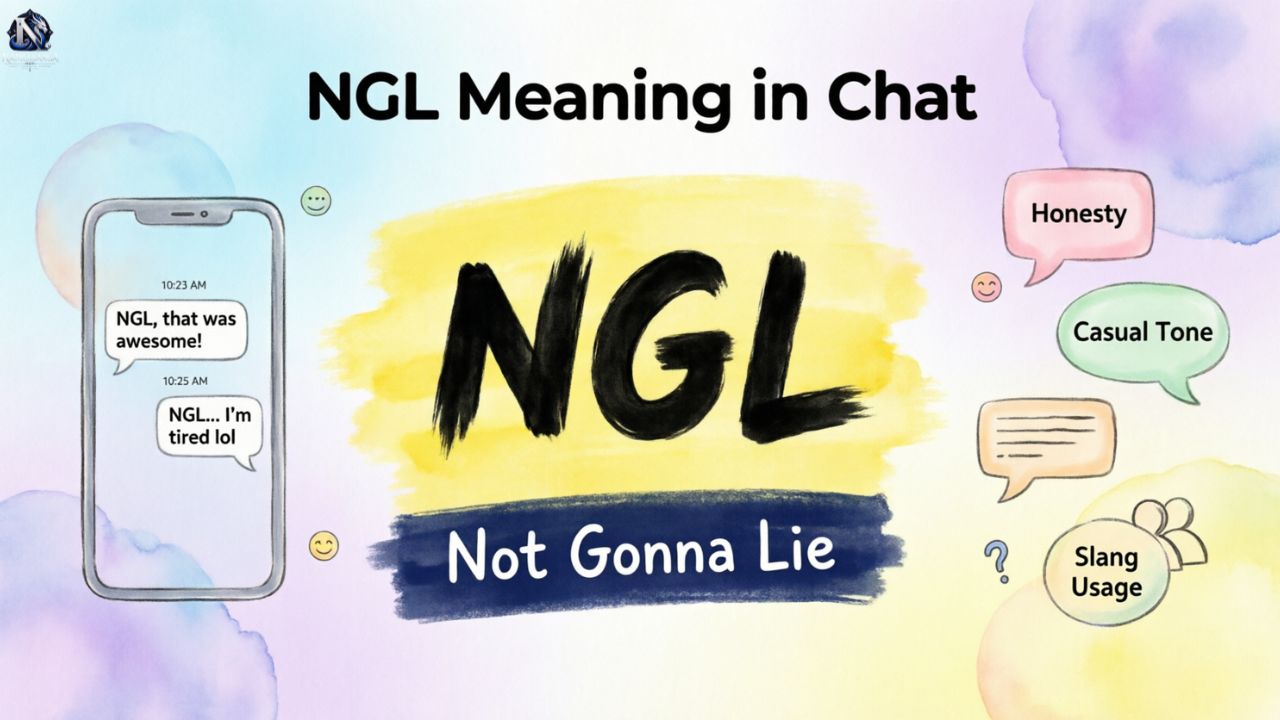
NGL means “not gonna lie.” People type it right before an honest opinion, an admission, or a direct thought. The abbreviation is only a signal that something sincere is coming. The words after it decide whether the message is sweet, funny, awkward, or serious.
This guide covers what NGL means in texts, DMs, and group chats, how it differs from TBH, where to place it in a sentence, when to skip it, and how to reply. It also explains how the slang differs from the NGL app, which was the subject of a 2024 FTC settlement.
Quick Facts About NGL
- Full form: not gonna lie (also written “not going to lie”)
- Type: initialism, read letter by letter (N-G-L)
- Tone: casual, candid, usually friendly
- Formality: informal only
- Where you’ll see it: texts, DMs, group chats, comments, and gaming chat
- Not to be confused with: the NGL anonymous messaging app
What NGL Signals in a Conversation
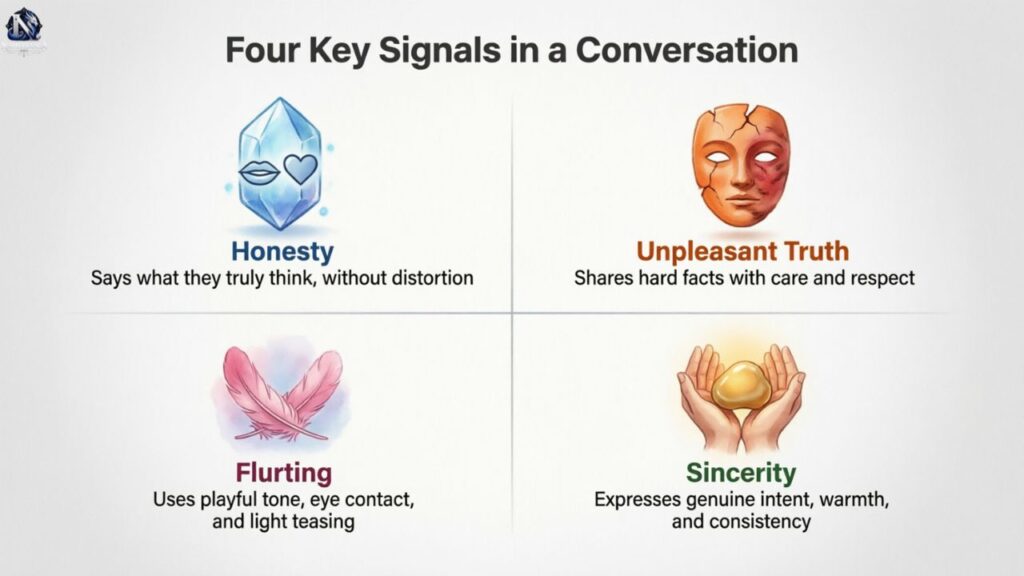
Think of NGL as a small flag placed in front of a sentence. It tells the reader, “I’m being straight with you.” What follows sets the mood.
- It softens: “Ngl, I think the blue jacket looks better.”
- It warns: “Ngl, I need to tell you something.”
- It admits: “Ngl, I never finished that book.”
- It praises: “Ngl, you handled that meeting really well.”
Text has no tone of voice, no facial expression, and no pause for effect. Three lowercase letters can make a blunt sentence feel lighter, and they can mark a confession as something the writer trusts you with. Most people type “ngl” in lowercase. Capitals can read as louder or more formal, though the meaning stays the same.
NGL Examples by Platform
The meaning doesn’t change from app to app, but the style shifts a little.
- iMessage and SMS: “Ngl, I forgot we had dinner at seven.”
- WhatsApp group chats: “Ngl, a ten-hour drive sounds like a lot for one weekend.”
- Instagram DMs: “Ngl, your sunset photos are seriously good.”
- TikTok comments: “Ngl, I thought this street food was overrated until I tried it.”
- Snapchat captions: “Ngl, this city is louder than I expected.”
- YouTube comments: “Ngl, the second half of this video is better.”
- Discord and gaming chat: “Ngl, that last round was unfair.”
What Does NGL Mean in Dating?
In dating conversations, NGL introduces an honest admission or opinion. It can be warm or cautious, so read the full message before deciding how to feel.
- Warm: “Ngl, I had a great time tonight.”
- Cautious: “Ngl, I’m not sure I’m ready for something serious.”
- Vulnerable: “Ngl, I like you more than I planned to.”
If a message opens with NGL and your stomach drops, pause before you reply. The sender may be about to share something hard, or something sweet. If the rest of the message leaves you unsure, ask a calm follow-up such as “What’s on your mind?”
Read More : FW Meaning in Text, Slang, Social Media, and Email
NGL vs. TBH: What’s the Difference?
TBH means “to be honest.” NGL means “not gonna lie.” Both introduce a candid statement, and in most sentences you can swap one for the other.
The difference is small and about feel. NGL tends to sound a little more casual and confessional, like you’re admitting something. TBH tends to sound like a plain, direct opinion. People don’t follow strict rules here, so use whichever sounds like you.
| Term | Full form | Feel | Best used for |
| NGL | not gonna lie | Casual, confessional | Admissions and surprises |
| TBH | to be honest | Plain, direct | Straightforward opinions |
| FR | for real | Emphatic | Strong agreement |
| IMO | in my opinion | Neutral | Reviews and debates |
| No cap | no lie | Youthful, emphatic | Backing up a claim |
| IRL | in real life | Neutral | Separating online from offline |
| SMH | shaking my head | Disapproving or exasperated | Reacting to something frustrating |
All of these fit texting and social media better than formal writing. If you’re using more than one in a single message, you may be overdoing it.
Is NGL Gen Z Slang?
Younger people use it heavily online, but adults use it too. “Not gonna lie” was a spoken phrase long before texting made shortening things a habit, and typing simply compressed it. It’s best described as informal internet slang used across age groups rather than a term owned by one generation.
Some older relatives, and people who are still learning English, may not recognize it. If you’re unsure whether the reader knows it, just write “not gonna lie” or “honestly.”
Is NGL Rude? Tone and Etiquette
NGL isn’t rude on its own. The sentence after it sets the tone.
- Friendly: “Ngl, you nailed that presentation.”
- Neutral: “Ngl, I think the second option looks better.”
- Harsh: “Ngl, that was a bad idea.”
A few habits keep your messages kind:
- Use it for feedback you’d also say in person. If you wouldn’t say it to their face, don’t type it.
- Don’t use it as cover for insults. Adding NGL doesn’t make a harsh comment gentle. Honest and harsh are different things.
- Pair criticism with a fix. “Ngl, the intro drags. Cutting two lines would help” is far more useful than “Ngl, the intro is boring.”
- Read it once before sending. If it stings on the way back to you, rewrite it.
Where to Put NGL in a Sentence
Placement changes the feel of a message.
At the start: “Ngl, the concert was better than I thought.” The honest part is announced first, so the reader is ready for it. This works best when the next words carry weight.
At the end: “I’m so tired today, ngl.” This reads as a relaxed aside, closer to a shrug. It works best for small, light thoughts.
A useful rule of thumb: open with NGL when you’re about to say something that matters, and close with it when you’re just being casual.
Can You Use NGL at Work?
Avoid it in client emails, reports, resumes, cover letters, and anything a manager might forward. In a relaxed Slack or Microsoft Teams chat with coworkers you know well, it may fit, but many people prefer plain wording in the workplace. When in doubt, choose a professional phrase:
- “To be candid,”
- “Honestly,”
- “In my view,”
- “My honest take is”
Common Mistakes With NGL
Assuming it always means bad news. People use it for praise as often as for criticism. “Ngl, you did great today” is as common as “Ngl, I’m disappointed.”
Treating it as permission to be unkind. The abbreviation doesn’t change what your words do to the other person.
Sending it to people who may not know it. A short explanation avoids confusion.
Typing it in formal writing. In a job application or client email, it can look careless.
Mixing it up with the app. The slang and the app share a name but have nothing else in common (more on that below).
How to Reply When Someone Texts NGL
The best rule is simple: reply to what the person said, not to the abbreviation. Match the mood of their message.
| Situation | Sample reply |
| Casual opinion | “Fair enough.” |
| Playful tone | “Ha, okay, tell me how you really feel.” |
| Funny moment | “Ngl, I respect the honesty.” |
| Serious or emotional message | “Thank you for telling me. I’m here if you want to talk.” |
| Work feedback | “Thanks for the feedback. I’ll take another look.” |
| Dating message | “I appreciate you saying that. Want to talk about it?” |
| You just need a beat to think | “Okay, I hear you. Give me a minute with that.” |
If the message is heavy and you don’t know what to say, warmth beats cleverness. A short “Thanks for telling me” is almost always better than a long, defensive reply.
NGL the Slang vs. NGL the App
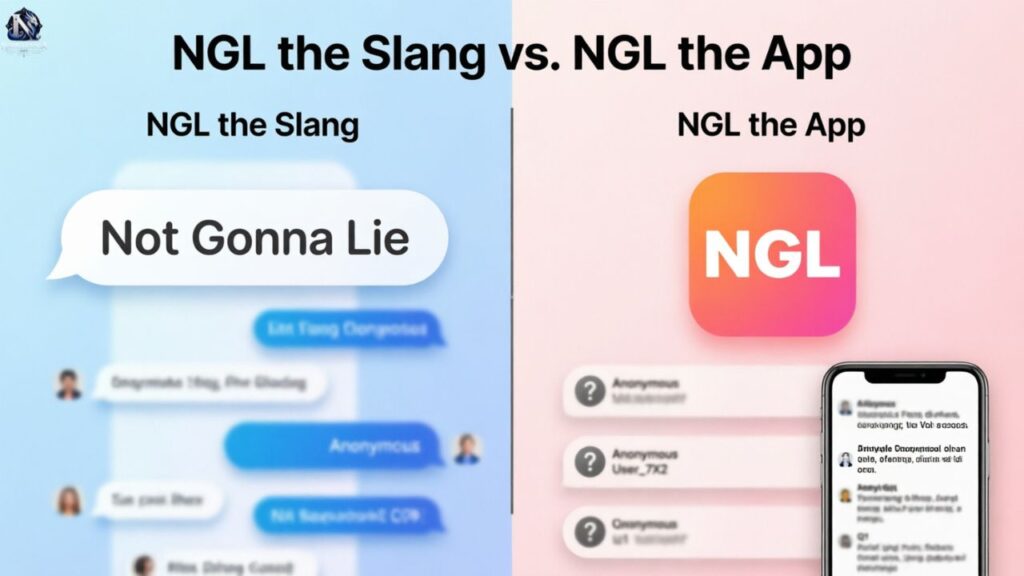
The slang and the app share a name, which causes real confusion.
The slang is a phrase you type in a chat. No company is behind it.
The app, called “NGL: ask me anything,” let users post a link on social media so followers could send them anonymous messages. It launched in 2021, which gave the three letters a second meaning. If someone says “send me an ngl,” they mean the app.
The FTC Settlement
The app has a public legal history. In July 2024, the Federal Trade Commission and the Los Angeles District Attorney’s Office announced a settlement with NGL Labs and two of its co-founders. The defendants agreed to pay $5 million and to stop offering the app to anyone under 18. The order also requires a neutral age gate to keep minors out.
The agencies said the company engaged in deceptive practices. Their allegations included:
- Sending fake messages that appeared to come from real people
- Telling users that paying for NGL Pro would reveal who sent their anonymous messages, which the agencies said was not true
- Charging many paying users a recurring weekly fee, reportedly up to $9.99, without making that clear
For current details on the settlement or any refund process, check the FTC’s official page rather than relying on third-party summaries, since claim windows and terms can change.
Quick Way to Tell Them Apart
- A phrase in a message: the slang.
- A link, an inbox, or anonymous questions: the app.
- Anything about age limits, subscriptions, or settlements: the app.
The slang is real and harmless. If you’re a parent whose teen uses anonymous-message apps, the FTC’s public press release on this case is a good starting point for understanding the risks.
What Does NGL Mean in Gaming?
In gaming chat, NGL keeps its normal meaning. Players use it to give blunt takes on plays, teammates, or a match. “Ngl, that clutch was insane” is praise. “Ngl, we lost that one in the first minute” is a candid post-mortem. It’s the same phrase in a different setting.
NGL Mean in Chat
Outside of chat, the letters show up in a few unrelated fields:
- Energy industry: natural gas liquids
- Construction: natural ground level
Context usually makes the meaning obvious. If you see NGL in a report about pipelines or drilling, it has nothing to do with the slang.
Where Does NGL Come From?
“Not gonna lie” is a spoken phrase, and it was common in conversation well before smartphones. When texting and social media took off, people shortened it to three letters to type faster, just as “be right back” became BRB and “laughing out loud” became LOL. The shortened form spread because it did something useful in text: it carried a small dose of sincerity in a medium that often strips tone away.
Read More : 350+ Funny Asian Names for Friends, Groups & Social Media (2026 List)
Frequently Asked Questions
What does NGL mean in a text message?
NGL means “not gonna lie.” Someone types it before an honest opinion, a confession, or a direct thought. For example: “Ngl, I forgot to charge my phone.”
Is NGL an acronym or an initialism?
It’s an initialism. You say each letter (N, G, L) instead of pronouncing it as a single word.
Does NGL always mean bad news is coming?
No. People use it for good news and bad news alike. Read the words that follow before reacting.
Should I capitalize NGL?
Either works. Most people use lowercase in chats. Capital letters can look louder or more formal.
Can I use NGL in an email to my boss?
It’s best to skip it. Choose “honestly” or “to be candid” instead, and save NGL for casual chats with people who know your style.
How is NGL different from TBH?
Both introduce an honest statement. NGL sounds a bit more casual and confessional, while TBH sounds more direct. Most people use them interchangeably.
What should I say when someone texts me NGL?
Reply to what they said, not to the abbreviation. “Thanks for being honest” works in many situations. For serious messages, choose a warm and supportive reply.
What does NGL stand for in dating?
It introduces an honest admission or opinion, which can be warm (“Ngl, I had a great time”), cautious, or vulnerable. The rest of the sentence tells you which.
What does NGL mean in gaming?
The same thing: “not gonna lie.” Players use it for blunt takes on plays and matches.
Is the NGL app safe for teens?
The FTC settlement bars the app’s operators from offering it to anyone under 18. Parents can read the FTC’s public press release for the full details.
What does NGL mean in natural gas?
In the energy industry, NGL means natural gas liquids. It has no connection to the slang.
Is NGL still used in 2026?
Yes. It remains a common abbreviation in texts, comments, and gaming chats.
Conclusion
NGL means “not gonna lie,” and it works as a small honesty flag at the front or back of a sentence. It can sound funny, sincere, blunt, or tender, and the sentence that follows always sets the tone.
Use it in casual chats with people who know your style, keep it away from professional writing, and never let it excuse an unkind comment. When someone sends it to you, answer the message, not the abbreviation: “Fair enough,” “Honestly, same,” or “Thanks for being honest” will cover most situations.

I’m Asma, founder of namessaaga.com, passionate about helping brands and startups discover unique, creative, and memorable names that stand out.